Buying cryptocurrency: all info & provider comparison
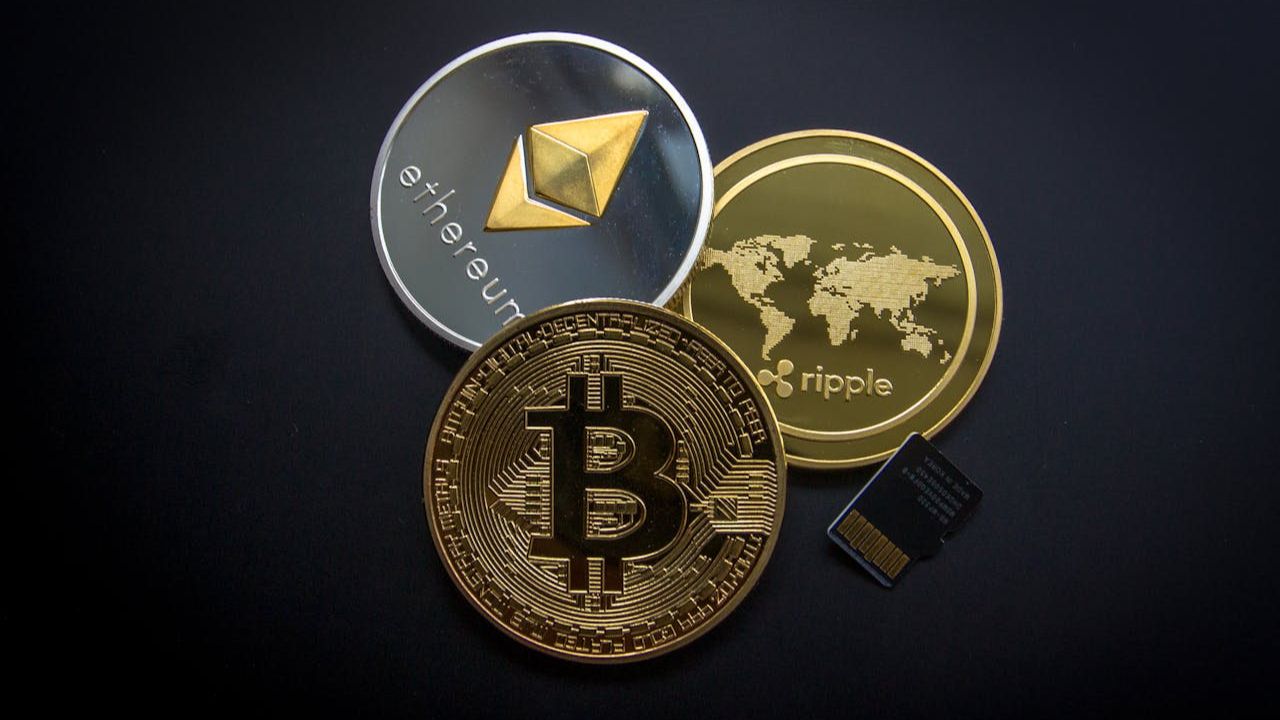
Want to Buy Cryptocurrency and Add It to Your Portfolio? Start Here. You’re in the right place if you’re looking to invest in cryptocurrency and integrate it into your portfolio. In this guide, we’ll walk you through what cryptocurrencies actually are — in simple terms — why buying them can be worthwhile, and which are the best providers in Switzerland.
Our provider comparison gives you a clear overview of the pros and cons of each platform so you can make a well-informed decision.
Table of Contents
- What are cryptocurrencies?
- How do cryptocurrency transactions work?
- Why is it worth investing in cryptocurrencies?
- How can you buy cryptocurrencies?
- Tips for buying cryptocurrency
- Buy and sell crypto: These are the providers
- These Swiss online brokers offer cryptocurrencies
- Quick note: Crypto ETNs and ETPs
- My conclusion: This is the crypto exchange I recommend
What are cryptocurrencies?
Cryptocurrencies are digital currencies. They serve the same function as the euro or dollar, with the major difference being that cryptocurrencies are virtual — they only exist online. Just like “normal” currencies (referred to in the crypto world as “fiat currencies”), they allow you to pay for products and services or invest in them to benefit from potential value increases.
What makes cryptocurrencies special is that they are based on a technology called blockchain. Blockchain is essentially the system where transactions are conducted and recorded. Imagine a huge digital ledger that works like accounting software. All participants, called “nodes”, have a copy of this ledger, where every transaction is stored. Each page in the ledger is a “block”. Every page number is called a “hash” — a calculation of all the transactions in that block.
To ensure that blocks are linked together into a chain — hence the name “blockchain” — each block stores the data of the previous block. Imagine the first sentence on each page being the hash of the previous page, followed by the hash of the current one. A hash is a unique combination of numbers and letters — meaning every block is unique and cannot be duplicated. Through a process called verification, network participants confirm that each block is valid. That’s why it can’t be faked.
Instead of being controlled by banks or governments, cryptocurrencies are managed by a decentralized network of computers. This means that no single entity has control — all users of the network collectively maintain the system.
You’ve probably heard of these cryptocurrencies: Bitcoin, Ethereum, Dogecoin, Tether, or Ripple. New ones enter the market so rapidly that listing them all here would be impossible. However, you can find a full list and current values on the CoainMarketCap website: https://coinmarketcap.com/coins/
How do cryptocurrency transactions work?
If you want to make a traditional bank transfer, you enter the transfer data (amount, recipient, IBAN, purpose, etc.) into your bank's system. Your bank verifies the information with the recipient's bank. Once verified, the transfer occurs, and both banks confirm it. The amount is debited from your account and credited to the recipient.
To send cryptocurrency, you don’t need a bank. All you need is a wallet — a kind of digital purse — the recipient's public key (the crypto equivalent of an IBAN), and your private key (your PIN). Once you confirm the transaction, it's sent to the network for verification.
You can set up your wallet online with a provider (we’ll list some further below) or store it locally on a USB stick (called a “Ledger”) for enhanced security.
Types of wallets:
|
Cold Ledger / Wallet |
Hot Ledger / Wallet |
|
|
Advantages |
- Offline storage for your cryptocurrencies - Increased security as hackers can't access the wallet - Ideal for long-term storage of larger amounts |
- Online storage for your cryptocurrencies - Ideal for quick transactions |
|
Disadvantages |
- Ledger or paper can be lost or misplaced more easily |
- Higher security risk as it's connected to the internet |
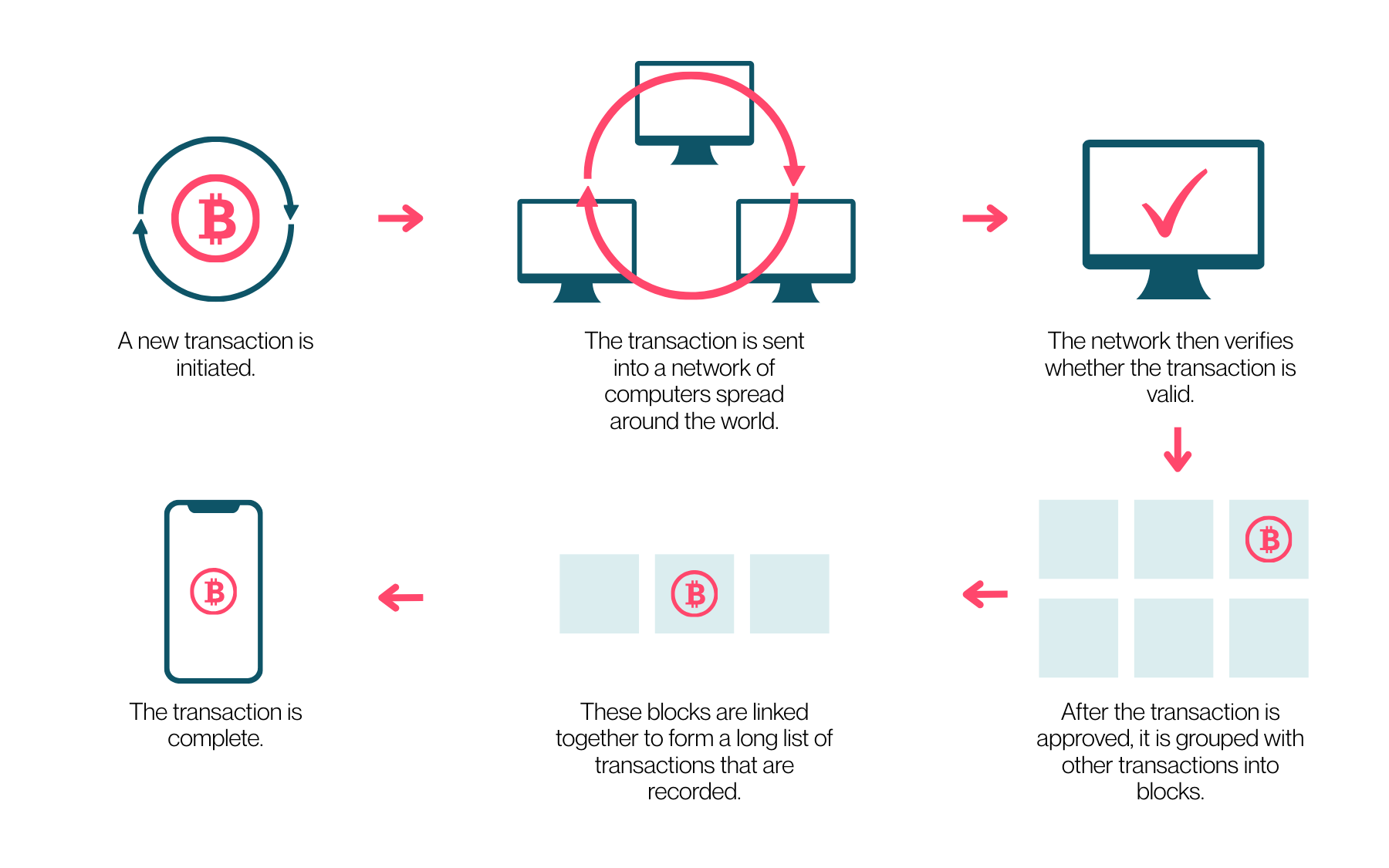
In the network, your transaction is bundled with other transactions. Together, they form a block, which is then added to previous blocks, creating the blockchain. This block is verified by so-called miners. Miners try to verify the transaction as quickly as possible using special computers with extremely high computing power. The verification process involves solving a puzzle – there is only one correct answer. The miner who verifies the block first receives a fee from everyone whose transaction is included in that block. The other miners or the network then confirm the transaction. You can view your transaction on websites like Blockchain.com. Once the confirmation is complete, the cryptocurrency is credited to the recipient’s wallet.
Why is investing in cryptocurrencies worthwhile?
Just like with other investment classes such as stocks, ETFs, derivatives, etc., investors buy cryptocurrencies to profit from potential future gains. In 2009, 1 Bitcoin was worth $0.0009. Today, a single Bitcoin is worth approximately CHF 87,110 (as of 30.05.2025). So you can easily calculate how much your investment would have multiplied.
But: The Bitcoin price has been a wild rollercoaster. In February 2022, its value crashed by more than half. And no one knew whether it would ever recover. Investing in cryptos definitely requires a strong stomach!
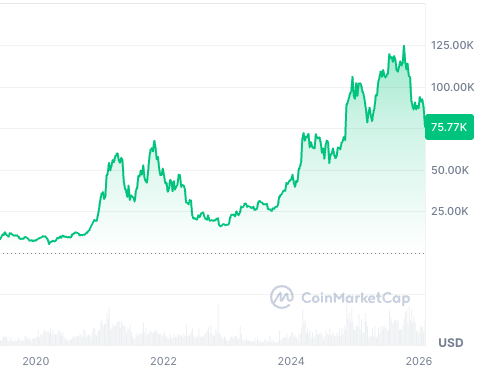
Source: https://coinmarketcap.com/currencies/bitcoin/
In addition to the potential returns, investors also use Bitcoin as a hedge against inflation – similar to gold. Why? Because Bitcoins are limited. There is only a fixed number of Bitcoins that can be generated, and once that limit is reached, no more will be created. This is in contrast to traditional currencies, which can be printed by central banks whenever there is not enough cash in circulation.Ç
|
Type |
Advantages |
Disadvantages |
|
Via CEX (Crypto Centralized Exchange) / Online Exchange |
Easy to get started |
The CEX holds your cryptocurrencies for you, meaning less control |
|
Via DEX (Decentralized Exchange) / P2P Trading |
Full control over your cryptocurrencies |
Often more expensive than regular exchanges |
|
Indirect purchase via ETNs |
Mirrors the performance of cryptocurrencies |
You do not actually own the cryptocurrency |
Buying cryptocurrency: These are my tips
Unlike other financial instruments such as stocks or ETFs, a cryptocurrency is not backed by any asset or tangible value that determines its price. In many cases, the price of a cryptocurrency is entirely speculative and determined solely by market demand.
Compared to stocks or ETFs, we also lack a long track record or reliable historical data on how cryptocurrencies may perform in the long term. Of course, historical returns from an ETF are never guarantees for the future. But if an ETF includes 500 companies, it's unlikely that all of them will go bankrupt in the next few years and wipe out your entire investment. With cryptocurrencies, we don’t know that.
That’s why I have the following tips for you:
- As with any investment, make sure to do your homework before buying. Calculate how much money you can invest and revisit your risk tolerance. Could you handle it if your entire investment disappeared or lost half its value overnight? In general, you shouldn’t invest more than 15% in alternative assets, including cryptocurrencies—which also includes real estate, gold, venture capital, and private equity. So, it’s wiser to limit cryptocurrency investments to a maximum of 5%.
- Only invest in products you understand. I’m glad you’re looking beyond traditional investment products like ETFs, gold, and stocks. But there is a lot of misinformation circulating about cryptos. Make sure you're not just following a social media trend before you invest.
- Stick to the largest cryptocurrencies like Bitcoin and Ethereum to avoid unnecessary risk and hype. I wouldn’t recommend investing in new or small coins.
Buying and selling crypto: these are the providers available
If you’ve read this far, you’ve probably been researching this topic for a while and digging into cryptocurrencies in depth, and you’re now ready to open your first crypto wallet and make your first purchase. Most crypto exchanges also offer a wallet function, so you can get both in one place.
I’ve reviewed 6 providers that are interesting for people in Switzerland and analysed their advantages, disadvantages, and costs:
| Provider | Coinbase | Binance | Relai | Crypto.com | Bitpanda | Kraken |
| Advantages | Wide range, beginner-friendly, regulated | Huge selection, low fees, advanced trading | Swiss based, easy, savings plan | Large offering, extra products | Very user friendly, EU regulated | Very secure, strong app |
| Disadvantages | High & unclear fees, no CHF | Complex, regulatory issues | Bitcoin only, higher fees | Complex fee structure | Fees only visible at order | Limited CHF deposits |
| Transaction Fees | Varies | ~0.1% | ~1% | Varies | 0–1.49% | 0.2–0.4% |
| Min. Investment | 1 CHF | 1 CHF | 25 CHF | 1 € | 1 € | 1 CHF |
| Savings Plan | Limited | Yes | Yes | Yes | Yes | Yes |
| Cryptos Available | 230+ | 400+ | Bitcoin only | 250+ | 300+ | 200+ |
| CHF Investments | No | No | Yes | No | No | Yes |
| Headquarters | USA | Malta | Switzerland | Malta | Austria | USA |
*Staking: Staking refers to holding cryptocurrencies in your wallet to help secure the network and validate other transactions. In return, you are rewarded with cryptocurrencies—similar to earning interest on your savings account—thus generating passive income.
These are the swiss online brokers where you can buy crypto
If you want to get started with cryptocurrencies but don’t want to install another app, you can check whether your existing online broker offers the ability to buy and sell crypto.
In Switzerland, these include:
Yuh
With Yuh you can invest in over 30 different cryptocurrencies — directly in the app, just like your other investments. In addition to Yuh’s usual advantages, you can even buy fractional cryptocurrencies and rely on transparent fee structures (1% transaction fee).
In addition: as a Yuh user you are rewarded with Swissqoins when you, for example, refer someone or make your first transfer of at least 500 CHF. You also receive Swissqoins as a reward for every trade. You can either hold these Swissqoins in your account hoping for value growth or cash them out.
Swissquote
With this Swiss provider you can buy and sell more than 40 cryptocurrencies. They also offer your own Swissquote wallet. Additionally, you can purchase crypto ETPs (explained in the next section) to further diversify your portfolio. You hold your cryptocurrencies easily in a multi-asset portfolio alongside your stocks and ETFs.
Another advantage: you can rely on the security of a Swiss bank.
Fees are also reasonable at 1%, and if you trade more than CHF 10,000, they drop to 0.75%. Staking is also possible!
Use the code MKT_FINANCEPHOENIX* to save 100.- in fees! Here’s the link to the provider.
In addition to Yuh and Swissquote, the following brokers also offer cryptocurrencies: DEGIRO, SAXO, Smolio, Alpian, NEON, PostFinance, CornerTrade. You can find which online brokers I recommend in the full provider comparison.
Quick note: crypto ETNs and ETPs
In addition to buying individual cryptocurrencies, you can also invest in crypto ETNs (Exchange Traded Notes) or crypto ETPs (Exchange Traded Products). Due to current regulation in Europe, crypto ETFs do not exist there right now*.
What is a crypto ETP?
- ETPs are a broad category of securities that follow an index on the stock exchange
- This includes ETFs (Exchange Traded Funds), ETNs (Exchange Traded Notes), and ETCs (Exchange Traded Commodities)
What is a Crypto ETN?
ETNs are securities that allow you to invest in exchange‑traded assets like cryptocurrencies.
They work like a fund, but they don’t hold the actual underlying assets (in this case the cryptos), they only track their performance.
This means the main risk of a crypto ETN lies with the issuer, and there is a potential insolvency risk that you are not protected against. So when choosing, make sure you check the rating of the ETN issuer!
You can research and find crypto ETNs online.
The largest provider of such ETNs is 21shares. They offer ETNs on single currencies like Bitcoin as well as products that cover multiple cryptos.
The cost for the IBIT (Bitcoin ETN) is currently 0.25% TER, plus your trading costs.
Swissquote and Yuh are currently the two Swiss providers where you can buy crypto ETNs.
*If you want to invest in crypto ETFs, you have to do so through a U.S. broker. As a Swiss resident you can use, for example, Interactive Brokers. However, this requires classification as a qualified investor to trade U.S. ETFs. Here you can find an overview of the crypto ETFs offered by Interactive Brokers.
My conclusion: this crypto exchange I recommend
As always, it is difficult to universally answer which crypto provider you should choose. If you are at the very beginning of your crypto investment journey and already use Swissquote or Yuh for your other investments, I would recommend using their integrated crypto offerings so you don’t need an additional provider.
If you want to buy cryptocurrencies outside of Swissquote and Yuh, I recommend that you create your own wallet and then buy through an exchange like Relai (national provider) or Bitpanda (international provider).I place more weight on security when it comes to cryptocurrency (e.g. through an own wallet and a reliable provider) than on a wide selection of coins — especially in the beginning, when you should only invest in the major cryptocurrencies anyway.
Here are the winners by category:
- Most trusted: Relai (Switzerland) and Bitpanda (Austria)
- Lowest fees: Binance
- Largest selection: Binance (over 400 cryptocurrencies)
*Affiliate code