Tax reform in Switzerland: What’s behind the push for individual taxation?
Status quo in Switzerland is that married couples are taxed jointly, while unmarried individuals are taxed separately. Sounds harmless? But think again. This system leads to unequal treatment because incomes are added together when taxed jointly, which, thanks to our progressive tax system, can result in higher (or sometimes lower) tax bills depending on how the income is split. When couples pay more tax simply because they're married, we call this the “marriage penalty.”
In summer 2025, the Swiss Parliament narrowly voted in favor of introducing individual taxation. The final decision will now go to a nationwide vote in 2026. If passed, it would mean that every individual-regardless of marital status-would be taxed independently.
In this article, you’ll find out:
- What the proposed reform actually includes
- Who the winners and losers could be
- And how I, as a financial planner, view the change
Table of Contents
- Current situation: How income is taxed today
- What will change exactly?
- Individual taxation: The financial impact on Switzerland
- When will individual taxation be introduced
- My perspective as a financial planner
Current situation: how income is taxed today
In Switzerland, your income-alongside your assets, is the main basis for how much tax you pay. Our tax system is progressive, meaning: the higher your income, the higher the percentage of tax you pay. On top of that, every canton has different tax rates. (Spoiler: Zug is a tax haven compared to Zurich.)
If you are single, you file your taxes as an individual. But if you're married, you file together - thus, combining both incomes and calculating a total. And here’s where things get tricky.
Because of the progressive system, this income pooling often results in a higher overall tax bill.
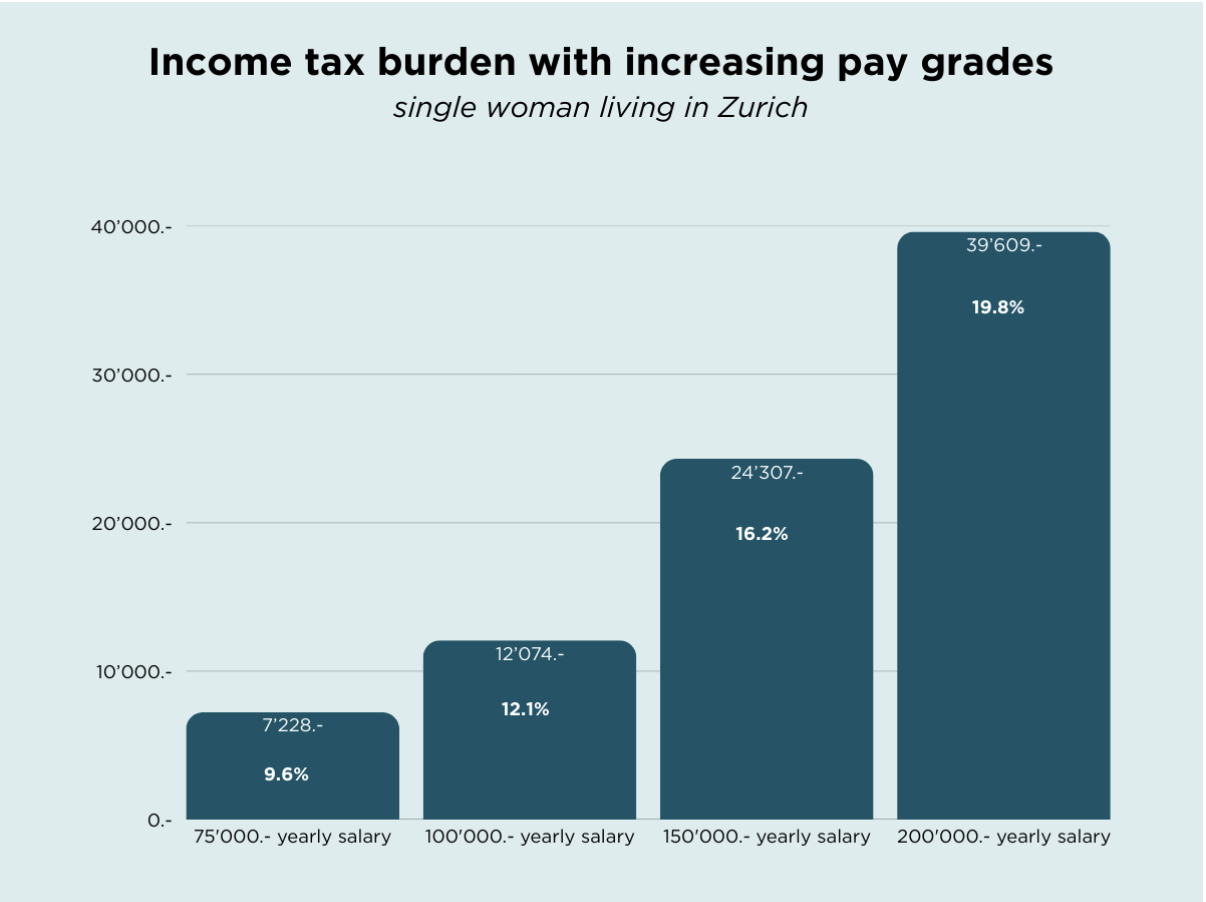
In the case of joint taxation, the taxes would change as follows:
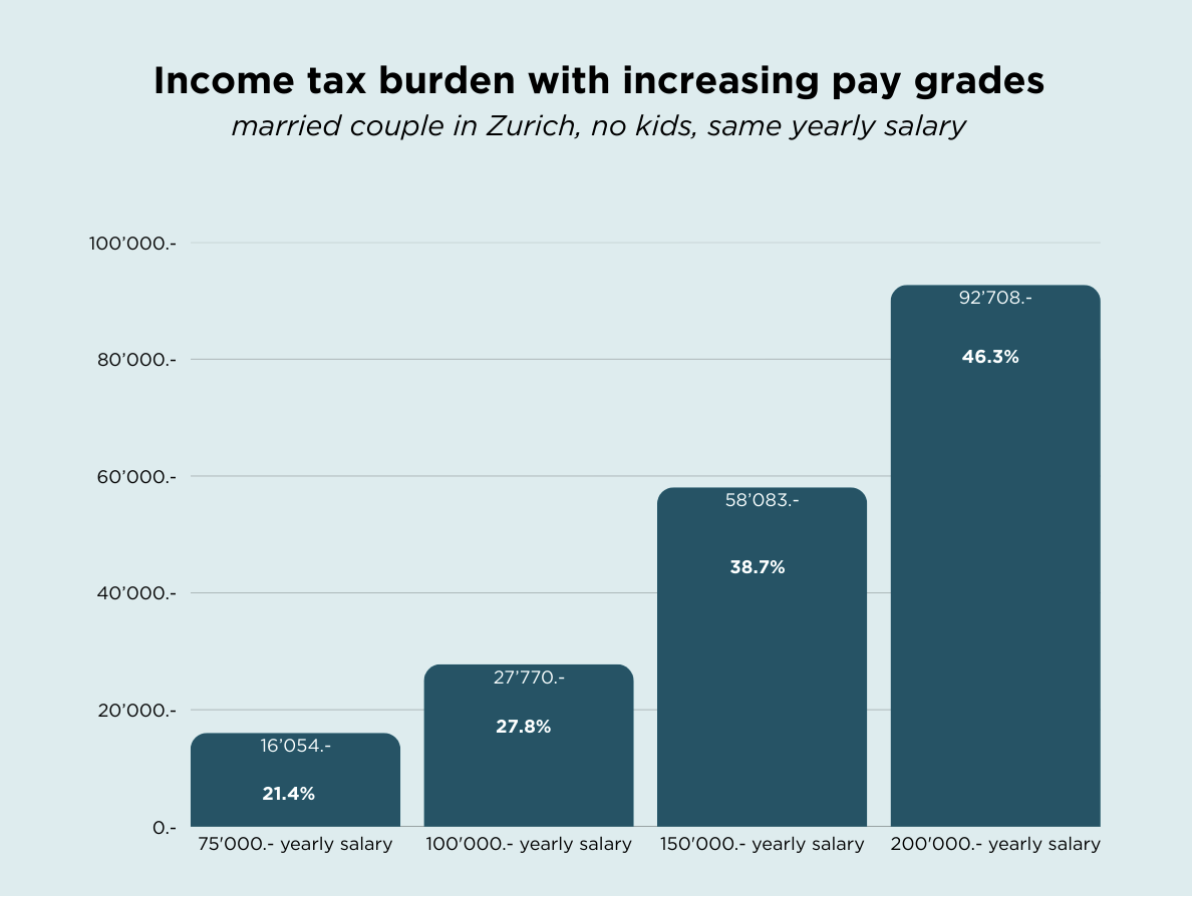
As you can see, a married couple where each person earns CHF 200’000.-, totalling CHF 400’000.- annually, have a joint tax burden of CHF 92’708.- (21.37%), which comes out at CHF 46’354.- per person.
Now, imagine they weren’t married. As single individuals, they’d each pay only CHF 39’609.- (19.8%) (on 200’000.-) each in taxes. That’s CHF 6’745.- more per person just because they are married.
Welcome to the so-called “marriage penalty”. This hits hard when both spouses earn approximately the same. BUT… if one spouse earns significantly less than the other, joint taxation can actually be beneficial - because the lower income brings down the average tax rate. This is the kind of complexity the new system hopes to clean up.
What will change exactly?
The planned tax reform aims to end this inequality between married and unmarried couples. If approved by voters in 2026, here’s what individual taxation would bring:
- Separate tax returns for spouses: Income and assets would be split based on legal ownership, not relationship status.
- Higher child deductions: The federal child deduction would increase from CHF 6’700.- to CHF 12’000.- per child.
- No special deductions for single-income households or couples with low second incomes.
- Adjusted tax rates to balance the changes:
- Lower rates for low and middle incomes
- Slightly higher rates for very high incomes
- A more balanced impact across all income levels
- Applies across all government levels: Federal, cantonal, and municipal
The goal? A fairer tax system for all family structures - especially dual-income couples and modern blended families.
Individual taxation: The financial impact on Switzerland
Of course, such a reform has a price tag. The Federal Council estimates a revenue loss of around CHF 1 billion per year from federal income taxes:
- CHF 800 million for the federal government
- CHF 200 million for the cantons
However, the actual impact will vary depending on the tax rates in each canton. And yes-this reform won’t happen overnight. It will take years for cantons and municipalities to adjust their tax laws accordingly.
When will individual taxation be introduced?
If all goes according to plan, the public vote will happen in March 2026. There’s also a second initiative currently in play - called “Yes to fair federal taxes for married couples.” This proposal also supports individual taxation but only at the federal level, making it easier to implement, but with far less impact for most taxpayers as the federal taxes make up about 10% of your income taxes.
My perspective as a financial planner
In my view, this reform is long overdue. The current system penalizes many dual-income couples, especially those where both partners earn similar salaries. And let’s be honest: Why should your tax bill go up just because you said "I do"?
The shift to individual taxation would bring us closer to genuine tax fairness and gender equality. Every person would be taxed based on their own income, regardless of relationship status.
Couples would be encouraged to get married before they have kids, which results in better risk coverage - especially for the spouse who’s reducing her working hours.
It would also create better incentives for second earners to work more. Right now, a higher second income often gets eaten up by taxes, making full-time work less attractive. With individual taxation, you get to keep more of what you earn, and that alone could encourage more women to stay in or return to the workforce. This is crucial to ensure that their earning power isn’t reduced with each year they stay at home. Because in case of a divorce, the partner doesn’t need to compensate for their lower income that comes from reduced working hours or even their lost earning potential.
From an economic standpoint, individual taxation is a win. Switzerland desperately needs more skilled workers, and making work more financially rewarding helps unlock untapped potential - especially among women.
Sure, the implementation will be complex. Cantons and municipalities need to revise their tax codes, which takes time. But the long-term benefits are clear: a modern, transparent, and fair tax system that reflects how people live and work today.